Ransomware Attack Disrupts Japan’s IDCF Cloud, Affecting 495 Businesses and Local Governments
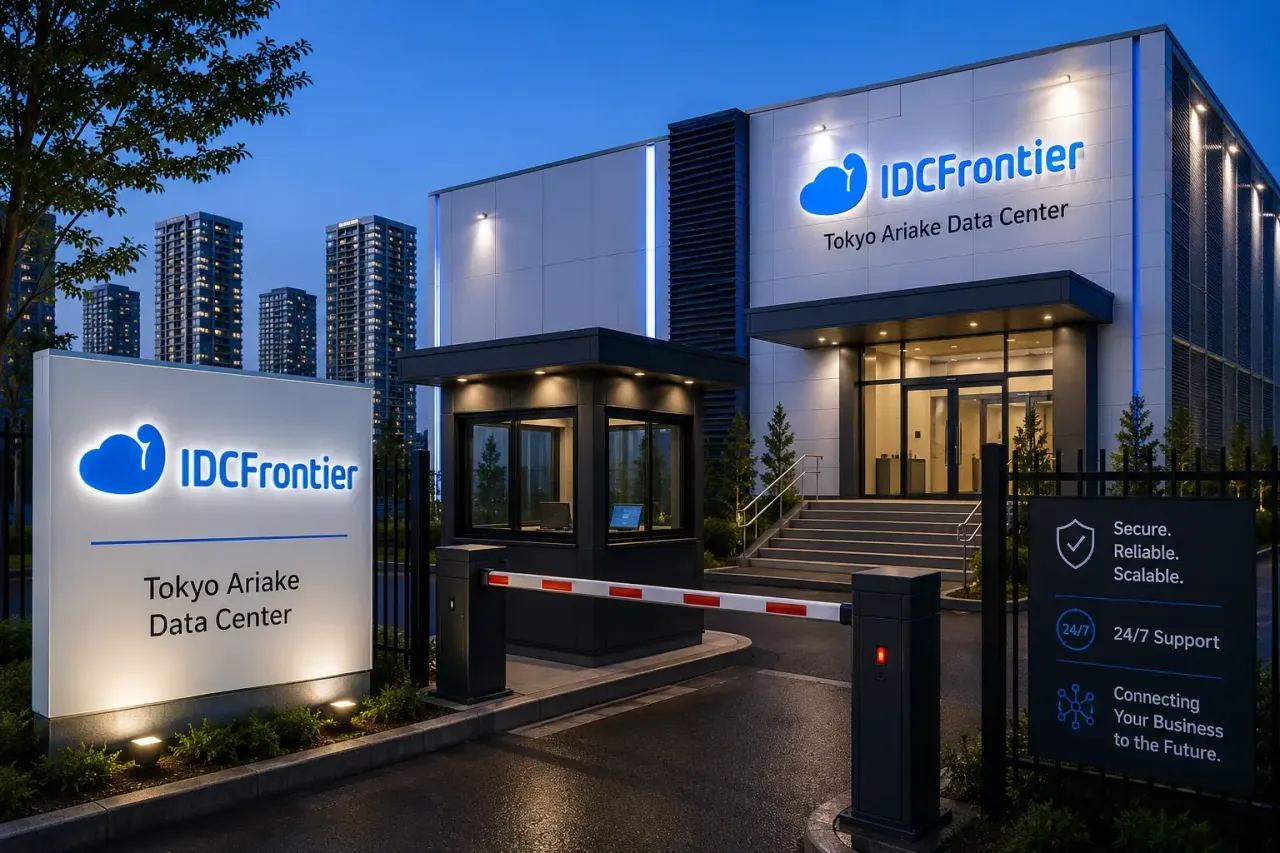
A major ransomware attack against Japanese cloud infrastructure provider IDC Frontier has disrupted its IDCF Cloud service, affecting 495 companies and local governments that depend on the affected environment. The incident, which began in the early hours of October 7, 2026, has caused virtual servers to stop operating and prevented customers from restarting their systems. By October 8, the company had confirmed that data stored in four affected zones might be difficult or impossible to recover through its own infrastructure, leaving customers dependent on backups maintained independently of the compromised environment.
The incident has become a significant example of the operational risks associated with cloud infrastructure providers. Rather than targeting a single organization that operates its own IT environment, the attackers struck a shared cloud platform supporting multiple unrelated customers. Consequently, businesses, public services, and software providers have faced simultaneous disruption even though they were not necessarily direct targets of the intrusion.
IDC Frontier, a subsidiary of SoftBank Group, has isolated the affected infrastructure, suspended access to customer management consoles while security checks continue, and begun investigating the intrusion. The company is also working with external security specialists to identify the entry point and assess whether other regions of its cloud infrastructure remain secure.
The full extent of the incident remains under investigation. Although the ransomware attack and resulting service disruption have been confirmed, the identity of the attackers, the precise intrusion method, and whether information was stolen from the affected systems have not been conclusively established in the available public disclosures.
Overview of the Cybersecurity Incident
The IDCF Cloud incident demonstrates how ransomware can cause widespread disruption when attackers compromise a service provider that hosts workloads for numerous customers. According to IDC Frontier's public incident updates, the disruption began at approximately 3:40 a.m. Japan Standard Time on October 7, 2026. The company subsequently determined that unauthorized access by a third party and a ransomware attack were responsible for the incident.
The affected environment is East Japan Region 1, where virtual servers experienced outages and could not be restarted. IDC Frontier identified four affected zones within this region: tesla, henry, pascal, and joule. These environments support customer workloads that depend on the provider's computing, storage, and networking infrastructure.
Following the discovery of the incident, IDC Frontier disconnected the affected region from the network and shut down the impacted systems. These actions were intended to contain the attack, prevent further damage, and reduce the possibility of additional data exposure. The company also suspended externally accessible management consoles across its cloud regions while conducting security checks.
The most serious development concerned the recovery of customer data. In its October 8 update, IDC Frontier stated that retrieving or restoring customer data stored in the four affected zones was expected to be difficult. Based on the company's assessment at that time, recovery would need to rely on backup data held by customers themselves.
This development significantly changes the nature of the incident. A temporary cloud outage may be resolved by restarting servers or restoring a limited number of services. However, when the provider cannot recover the underlying customer data, affected organizations may need to reconstruct their environments, restore applications from independent backups, validate their information, and rebuild their operations on alternative infrastructure.
What Is IDCF Cloud?
IDCF Cloud is a cloud infrastructure service operated by IDC Frontier, a Japanese data center and cloud computing company within the SoftBank Group. The platform provides computing resources and related infrastructure that customers can use to operate websites, applications, databases, and business systems without maintaining every physical server themselves.
Cloud infrastructure services generally allow organizations to provision virtual servers, allocate storage, configure networks, and manage workloads through administrative interfaces. Instead of purchasing and maintaining physical hardware for every application, customers can use resources supplied by a cloud provider and scale their environments according to operational requirements.
This model can reduce infrastructure costs and simplify system administration. It also introduces dependencies that organizations must carefully manage. A customer may control the operating system and applications running on a virtual machine while relying on the provider to maintain the underlying physical infrastructure, virtualization layer, storage systems, and network connectivity.
These responsibilities are commonly divided under a shared responsibility model. The cloud provider is responsible for securing and maintaining the infrastructure it operates, while customers remain responsible for many aspects of their own workloads, including application security, identity management, data governance, and backup arrangements, depending on the service agreement.
The IDCF Cloud incident illustrates why the distinction matters. Even a customer with properly configured applications and strong internal security controls can experience severe disruption if the infrastructure hosting those applications becomes unavailable. Customer-side defenses cannot independently restore a virtual machine or recover a database if the necessary underlying resources have been compromised or rendered inaccessible.
IDC Frontier's position within the SoftBank Group also makes the incident relevant to the broader Japanese technology sector. The attack has raised questions about the resilience of shared digital infrastructure, the effectiveness of recovery arrangements, and the measures required to protect cloud services used by both private companies and public organizations.
Timeline of the IDCF Cloud Ransomware Attack
The following timeline summarizes the major publicly reported developments. The investigation is ongoing, and additional findings may change the understanding of the incident.
October 7, 2026: Initial Disruption
At approximately 3:40 a.m. JST, IDC Frontier experienced unauthorized access affecting part of its IDCF Cloud service. The disruption affected East Japan Region 1, where virtual servers began experiencing operational failures.
Customers subsequently encountered service interruptions, including virtual machines that had stopped running and could not be restarted. The affected infrastructure supported workloads belonging to businesses and local governments, creating the possibility of service outages extending beyond the cloud provider itself.
October 7, 2026: Ransomware Confirmed
As the investigation progressed, IDC Frontier confirmed that the disruption was caused by a third-party ransomware attack. The company isolated East Japan Region 1 from the network and halted affected systems to reduce the risk of further damage.
At this stage, the provider was still investigating the initial intrusion route, the scope of the compromise, and the security of its other cloud regions. It also began evaluating the operational impact on affected customers.
October 7, 2026: Security Measures Expanded
IDC Frontier began checking the security of other regions to determine whether the incident was limited to the affected environment. As a precaution, it temporarily disabled externally accessible customer management consoles while those checks continued.
Although the incident centered on East Japan Region 1, this precautionary measure affected customers' ability to administer systems through the usual interface. IDC Frontier stated that it would restore access after confirming that the relevant environments were safe.
October 8, 2026: Recovery Concerns Become Clearer
In a subsequent public update, IDC Frontier identified the four affected zones as tesla, henry, pascal, and joule. The company stated that retrieving or restoring customer data stored in these zones would be difficult and that recovery was expected to depend on backups independently retained by customers.
The disclosure marked a major escalation in the incident's operational consequences. Organizations that did not possess usable, independent backups could face substantially longer recovery periods and potentially permanent loss of affected information.
IDC Frontier continued investigating the intrusion, assessing the scope of the incident, and working with affected customers on the preparation of alternative environments.
How the Attack Affected 495 Organizations
IDC Frontier reported that 495 companies and local governments holding IDCF Cloud contracts were affected by the incident. This figure represents organizations using services in the affected environment, rather than a confirmed count of individual victims whose personal information was stolen.
The distinction is important because service disruption and data theft are separate consequences of a cyberattack. An organization may lose access to its systems without evidence that attackers extracted its information. Conversely, an organization may experience data theft even when its systems remain operational.
In this case, the confirmed consequences included stopped virtual servers, an inability to restart affected systems, and substantial concerns about restoring data from the affected zones. The full scope of any information exposure had not been conclusively established in the company's public disclosures available at the time of reporting.
Organizations using the affected infrastructure may depend on it for a wide variety of operational activities. These can include website hosting, application delivery, inventory management, internal databases, customer portals, and other business services. The consequences for each organization depend on which workloads were hosted in the affected zones and whether alternative systems were available.
Public-sector customers face additional continuity challenges. If a municipal website or an administrative application depends on an unavailable cloud environment, residents and businesses may have difficulty accessing information or completing online procedures. The outage does not establish that government records were stolen, but it demonstrates that the availability of digital public services can depend on the security and resilience of external technology providers.
The shared nature of cloud infrastructure makes the incident particularly significant. A single successful attack against a provider can affect hundreds of customers at once, creating a much larger operational footprint than an attack confined to one company's internal network.
Four Cloud Zones Face Serious Data Recovery Problems
One of the most concerning findings in IDC Frontier's updates was the outlook for customer data stored in the four affected zones. The company indicated that retrieving or recovering this data would be difficult and that, based on its assessment, customers would need to rely on their own backups to restore their environments.
The four identified zones are tesla, henry, pascal, and joule, all within East Japan Region 1. The affected virtual servers could not be restarted, leaving customers unable to resume normal operations through their existing cloud environments.
Ransomware can interfere with the availability of data by encrypting files, disrupting storage systems, disabling servers, or damaging the infrastructure needed to access information. Depending on the attack and the recovery architecture, restoring a service may require more than removing malicious software. Administrators may need to rebuild affected systems and restore databases, application files, configuration data, and associated dependencies.
In cloud environments, recovery can be especially complex because virtual machines often rely on shared storage and virtualization systems. If these components are compromised or rendered unusable, individual customers may be unable to restore their systems independently through ordinary administrative controls.
IDC Frontier's disclosure does not, by itself, establish that every piece of data in the affected zones was permanently destroyed. It indicates that the provider considered retrieval and recovery difficult and directed customers toward their own backups. The ultimate outcome for individual customers depends on the availability, integrity, and completeness of those backups.
For organizations with recent, verified backups stored outside the affected environment, restoration may be possible through a separate infrastructure provider or a newly built cloud environment. Customers without suitable backups may face data gaps, extended downtime, and the need to reconstruct information from secondary sources.
The incident reinforces an essential principle of disaster recovery: maintaining a backup is not sufficient unless that backup remains accessible and usable when the primary production environment fails.
Customer Services Disrupted Beyond the Cloud Provider
The effects of the IDCF Cloud outage extended to services operated by organizations that relied on the affected infrastructure. Reports from Japanese technology publications described disruptions affecting websites, software platforms, and business operations.
Six Apart, the company associated with the Movable Type publishing platform, reported that 31 servers supporting its Movable Type Cloud service were affected. The disruption made relevant administration interfaces and websites unavailable. Following the assessment that recovery on IDCF Cloud was not expected, the company began using backups and migrating its environment to Sakura Cloud.
The situation illustrates how an infrastructure incident can cascade into the software and online services built on top of it. A customer may have a functioning application and a business continuity plan, but if its cloud-hosted servers become unavailable, its users may still lose access to the service.
Japanese reports also described operational difficulties affecting services supplied by Greenwich, including inventory coordination and price-update systems. Disruptions to such services can interfere with routine business processes, particularly when companies depend on automated exchanges of information between suppliers, online stores, and inventory platforms.
Separately, Nissui Logistics, a logistics subsidiary of Japanese marine products company Nissui, reported a system outage involving a third-party data center it used. The disruption affected the movement of goods, including shipping and receiving activities. The relationship between that incident and the IDCF Cloud attack had not been established in the available reporting, so the two incidents should not be treated as confirmed parts of the same attack.
These examples show how infrastructure failures can produce consequences far beyond the data center. Depending on the affected applications, a cloud outage can interrupt online publishing, prevent inventory updates, delay transactions, and create logistical bottlenecks.
For organizations operating time-sensitive services, the resulting losses may include missed transactions, delayed deliveries, increased support requests, contractual disputes, and reputational damage. The scale of these consequences depends on the duration of the outage and the availability of alternative systems.
What Is Known About the Attack Method?
IDC Frontier has confirmed that the incident resulted from unauthorized access by a third party and a ransomware attack. However, the company's public updates did not establish the precise initial access technique, the identity of the threat actor, or the complete sequence of actions taken inside the environment.
Ransomware incidents commonly begin through several possible routes. Attackers may exploit vulnerabilities in internet-facing systems, obtain credentials through phishing or other forms of credential theft, compromise remote access services, or enter through an already compromised network. In some incidents, attackers exploit weaknesses in administrative interfaces or use access obtained through a third party.
After gaining access, an attacker may attempt to expand privileges, discover other systems, access administrative tools, interfere with security controls, and identify valuable data. Depending on the environment, the attacker may then encrypt or otherwise disrupt information and infrastructure.
These are general ransomware techniques, not confirmed details of the IDCF Cloud attack. Without findings from the provider's investigation, it would be inaccurate to claim that the incident began with a particular vulnerability, stolen password, phishing email, or compromised administrator account.
Reports concerning the incident also described a message attributed to the threat actor that made claims about the scale of the compromise, including the number of databases, hypervisors, virtual machine disks, and snapshots affected. Such statements should be treated as unverified attacker claims unless independently confirmed by the provider or investigators.
The distinction between a threat actor's statements and verified incident findings is important. Attackers may exaggerate the extent of their access to increase pressure on a victim, while the absence of public confirmation does not prove that the claims are false. A reliable assessment requires forensic evidence and corroboration.
Was Customer Data Stolen?
As of the public disclosures reviewed for this article, the full extent of any data theft had not been conclusively established. IDC Frontier continued investigating the intrusion route and impact, and it had not publicly confirmed that customer information had been exfiltrated from the affected environment.
Data encryption, data destruction, service interruption, and data exfiltration are distinct outcomes. Ransomware operators may encrypt or disrupt systems to prevent legitimate access. Some also copy sensitive information before encryption and threaten to publish it unless the victim pays a ransom. However, not every ransomware incident involves confirmed data theft.
If information was copied from the affected environment, the potential consequences could include exposure of confidential business records, customer information, application data, or operational documents. The actual risk would depend on the type of information accessible to the attacker and the extent of any unauthorized transfer.
Organizations should avoid assuming either that their information was stolen or that it remained safe simply because no theft has been publicly confirmed. Affected customers should review communications from IDC Frontier, evaluate their own logs and available forensic evidence, and determine whether their data protection and notification obligations have been triggered.
Any confirmed exposure of personal information would require a separate assessment of the affected records, relevant legal obligations, and potential harm to individuals. Until the investigation provides more information, claims about the number of personal records compromised or the sale of customer data would be premature.
How IDC Frontier Responded
IDC Frontier's immediate response focused on containing the incident, preventing additional damage, assessing the scope of the compromise, and helping affected customers plan their recovery.
Network Isolation and System Shutdown
The company disconnected East Japan Region 1 from the network and stopped the affected systems. Network isolation is a common incident response measure used to limit an attacker's ability to communicate with compromised systems and reduce the risk of further spread.
Shutting down systems can also help prevent additional changes to affected infrastructure while investigators assess the situation. However, containment measures can extend service outages, particularly when the isolated systems support production workloads.
Investigation With External Security Specialists
IDC Frontier stated that it was working with external security specialists to identify the intrusion route and investigate the affected infrastructure. This work includes examining the relevant networks, servers, and storage systems across its East Japan and West Japan regions.
Investigators need to establish how the attackers gained access, which systems were affected, whether unauthorized activity extended beyond the initial environment, and what changes are required before services can safely resume.
Security Checks Across Other Regions
Although the confirmed disruption centered on East Japan Region 1, IDC Frontier also reviewed the security of other regions. It temporarily suspended customer access to externally accessible management consoles while conducting these checks.
This decision may have limited the risk of further unauthorized activity, but it also created administrative challenges for customers who needed to manage otherwise unaffected resources. The company stated that access would be restored after the relevant security checks were completed.
Customer Communication and Rebuilding
IDC Frontier reported that it was contacting affected organizations individually. For customers whose workloads were hosted in the four affected zones, the company advised preparing separate environments and rebuilding their systems using customer-held backups.
Rebuilding a cloud environment requires more than restoring files. Customers may need to recreate virtual machines, reinstall software, configure networks, restore databases, validate application dependencies, and verify that administrative credentials and security settings remain trustworthy.
Organizations must also determine whether restored systems can safely reconnect to their production networks. If the original compromise involved stolen credentials or a weakness in a shared configuration, restoring the same environment without addressing the underlying issue could expose the replacement systems to renewed attacks.
Why Ransomware Operators Target Cloud Providers
Cloud providers and hosting companies can represent attractive targets because they support numerous customers through a shared infrastructure layer. A successful compromise may disrupt several organizations at once, creating significant pressure on the provider and its customers to restore operations quickly.
In a conventional attack against an individual company, the attacker may need to compromise that company's network and applications to cause substantial damage. An attack against a service provider can create a broader impact because multiple customer environments depend on the same underlying systems.
This does not mean that all cloud customers share the same security boundary or that a compromise of one tenant automatically grants access to every other tenant. Properly designed cloud platforms use isolation controls to separate customer workloads. Nevertheless, an attack that affects provider-managed infrastructure, shared storage, virtualization systems, or administrative services can create risks that individual customers cannot fully control.
Cloud providers also operate systems that may be critical to customer continuity. When a provider experiences a severe outage, customers can face substantial recovery costs even if their own applications were not directly targeted.
Another factor is the potential leverage ransomware operators gain from operational disruption. Businesses that rely on cloud services may face lost revenue, contractual obligations, customer dissatisfaction, and deadlines that cannot easily be postponed. These pressures can make an incident particularly costly even when the amount of confirmed data theft remains unknown.
However, there is no confirmed public attribution identifying the threat actor behind the IDCF Cloud incident. It would therefore be inappropriate to assign the attack to a particular ransomware group or claim that it was motivated by a specific financial or political objective.
The Shared Responsibility Problem in Cloud Security
The incident highlights a fundamental challenge in cloud computing: responsibilities for security and recovery are divided between the provider and its customers.
Providers generally manage the physical data center, core networking, virtualization infrastructure, and the security of services they operate. Customers are typically responsible for securing their applications, controlling user access, maintaining appropriate configurations, and protecting data according to the service model and contractual terms.
Backup responsibilities vary between cloud services. Some platforms provide managed backup features, while others require customers to configure their own backup processes. Even when a provider offers snapshots or backup tools, customers should understand where the resulting copies are stored, who can access them, and whether they remain available if the provider's primary environment is compromised.
The IDCF Cloud incident demonstrates why this distinction cannot be treated as a minor technical detail. If recovery depends entirely on data stored within the same environment as production workloads, a sufficiently severe attack could affect both the original systems and their recovery mechanisms.
Independent backups provide an additional layer of protection. Depending on the threat model, these may be stored in a separate cloud account, a different provider, an offline environment, or another location that the compromised production environment cannot directly modify.
Organizations should also understand the limits of their cloud contracts. Service availability commitments may define financial remedies for certain outages, but they do not necessarily guarantee restoration of all customer data after a destructive cyberattack. Businesses need to examine these provisions alongside their own continuity requirements.
Disaster Recovery Lessons for Businesses
The incident provides several important lessons for organizations that depend on cloud infrastructure for critical operations.
Maintain Independent Backups
Backups should be separated from production systems so that a compromise of the primary environment does not automatically expose recovery copies. Organizations should consider immutable or offline backup arrangements, separate administrative credentials, and access restrictions that prevent ordinary production accounts from deleting every available backup.
Backup frequency should reflect how much data the organization can afford to lose. A business that processes transactions continuously may require more frequent backups than a website whose content changes only occasionally.
Test Restoration Procedures
A backup is useful only if the organization can restore it within an acceptable period. Regular restoration exercises should test whether the data is complete, whether applications can run using the restored information, and whether the recovery process can be completed without relying on the affected provider.
Testing should include the reconstruction of infrastructure components, not just the recovery of individual files. Virtual machine configurations, network rules, application secrets, certificates, database dependencies, and access controls may all be required to return a service to operation.
Prepare for Cloud Provider Outages
Organizations should identify which business processes depend on each cloud provider and determine what happens if a particular region becomes unavailable for several days or longer.
For critical services, a recovery strategy may include infrastructure templates, documented migration procedures, alternative hosting arrangements, and tested methods for restoring data to a different provider. Such preparations can reduce dependence on the affected platform during an emergency.
Moving to another provider is not always straightforward. Differences in networking, identity management, storage formats, and platform-specific services can complicate migration. These limitations should be identified and addressed before an incident occurs.
Protect Administrative Access
Administrative accounts should use strong authentication, preferably phishing-resistant multifactor authentication where supported. Privileged access should be limited to the people and systems that require it, and sensitive administrative actions should be logged and monitored.
Organizations should also review how cloud management credentials are stored and used. Long-lived credentials with excessive privileges can increase the impact of an account compromise, especially when the same credentials are reused across environments.
Establish Clear Recovery Priorities
During a major outage, not every system can necessarily be restored at the same time. Organizations should identify essential services, establish recovery priorities, and determine the maximum acceptable downtime for each critical workload.
Recovery objectives should include the recovery time objective, which defines how quickly a service should return, and the recovery point objective, which defines the maximum acceptable loss of recent data. These objectives should be realistic and supported by tested technical procedures.
Implications for Japan's Digital Infrastructure
Japan's businesses and public institutions increasingly depend on interconnected digital services for routine operations. Cloud infrastructure supports online commerce, logistics, publishing, internal administration, and many other activities. A serious incident at a provider can therefore create consequences that extend well beyond the provider's own business.
The IDCF Cloud attack is particularly significant because the reported customer base includes both companies and local governments. Public institutions may use cloud-hosted systems to provide information and services to residents, while private organizations may depend on the same infrastructure for customer-facing applications or internal workflows.
When multiple customers experience disruption at once, the recovery effort can become more complicated. Each organization must assess its own operational dependencies, determine whether its data can be restored, and coordinate with the provider or alternative service vendors.
There is also a wider supply-chain consideration. A company may rely on a software provider that relies on a hosting company that depends on another infrastructure supplier. An attack against one layer can disrupt services throughout the chain, even when organizations further downstream have not themselves been compromised.
For this reason, vendor risk assessments should examine more than a provider's security certifications or general reputation. Organizations should understand its incident response procedures, recovery arrangements, backup architecture, communication practices, and ability to support customers during a prolonged outage.
The incident also reinforces the importance of transparency during cybersecurity emergencies. Timely updates help customers understand what is known, what remains uncertain, which actions they should take, and whether alternative infrastructure is required. In a multi-customer outage, the quality of communication can materially affect how quickly organizations respond.
Regulatory and Legal Considerations
IDC Frontier stated that it had reported the incident to relevant supervisory authorities and the Tokyo Metropolitan Police Department while continuing its investigation. These steps are part of the broader process of assessing the incident and determining the appropriate response.
For affected customers, regulatory obligations will depend on their own circumstances, the information involved, and the applicable laws and contractual requirements. An outage alone does not necessarily mean that personal information has been exposed, but evidence of unauthorized access to protected information may trigger additional responsibilities.
Organizations should preserve relevant logs, incident notifications, backup records, and communications with their service providers. They should also document the operational impact and the measures taken to contain the disruption and restore affected systems.
Where data exposure is confirmed, organizations may need to assess notification requirements, contractual duties, and potential consequences for affected individuals. Legal and compliance teams should work with technical investigators rather than assuming that all customers face identical obligations.
It is also important to distinguish the provider's responsibilities from those of its customers. The precise allocation of liability may depend on service agreements, the cause of the incident, applicable law, and the circumstances surrounding the loss or unavailability of data. The existence of a ransomware attack does not by itself establish legal liability or determine the outcome of any future claims.
What Happens Next?
The next phase of the incident will depend on the results of IDC Frontier's investigation and the recovery efforts undertaken by affected customers. The provider must determine the scope of the compromise, establish whether other regions were affected, and verify the security of systems before restoring ordinary access.
Customers whose workloads were hosted in the four affected zones face the immediate task of determining whether they have sufficient backups to rebuild their systems. Some may be able to restore their services relatively quickly, while others may need to reconstruct complex environments or recover missing information from secondary sources.
Organizations operating services that depend on IDCF Cloud may also need to assess the cost and feasibility of moving to alternative infrastructure. For some, a temporary migration may be the fastest route to restoring operations. For others, differences in software architecture or data dependencies may make a migration more difficult.
The status of customer data remains a central concern. Further information about the intrusion route, any confirmed data exposure, and the recovery prospects for the affected systems would help organizations determine the extent of the damage and the measures required to prevent a similar incident.
Attribution is another unresolved question. Unless investigators or the company provide reliable evidence identifying the attacker, any claim assigning the incident to a specific ransomware group should be treated cautiously.
Finally, the incident may prompt affected organizations to review their cloud contracts and continuity arrangements. Customers are likely to place greater emphasis on independent backups, clear recovery commitments, and the ability to operate critical services outside a single cloud region.
Conclusion
The ransomware attack against IDC Frontier's IDCF Cloud service demonstrates the extensive operational consequences that can follow a compromise of shared cloud infrastructure. Beginning at approximately 3:40 a.m. JST on October 7, 2026, the incident disrupted East Japan Region 1 and affected 495 companies and local governments. Virtual servers stopped operating, the provider isolated the affected environment, and subsequent disclosures raised serious concerns about recovering customer data stored in four zones.
The most consequential aspect of the incident is the potential need for customers to rebuild their environments using independently maintained backups. This highlights the difference between relying on a cloud provider for service availability and maintaining a recovery strategy that can withstand a severe failure of that provider's infrastructure.
IDC Frontier has confirmed the ransomware attack and described its containment and investigation efforts. However, the precise intrusion method, the identity of the attacker, and the extent of any data theft remain unresolved in the available public disclosures. Those questions must be answered through continued investigation rather than assumptions about common ransomware tactics.
For businesses and public institutions, the broader lesson is clear: cloud adoption does not eliminate the need for disaster recovery planning. Organizations must understand their infrastructure dependencies, maintain independent and tested backups, protect administrative access, and prepare to restore critical services even when their primary cloud environment is unavailable.
As investigations and recovery efforts continue, the IDCF Cloud incident will remain an important case study in cloud resilience, third-party risk, and the need to design recovery strategies around the possibility of a major infrastructure-level cyberattack.
